The Quiet Surrender to AI
We imagined machines would have to overpower us. We didn't imagine we'd just let go.
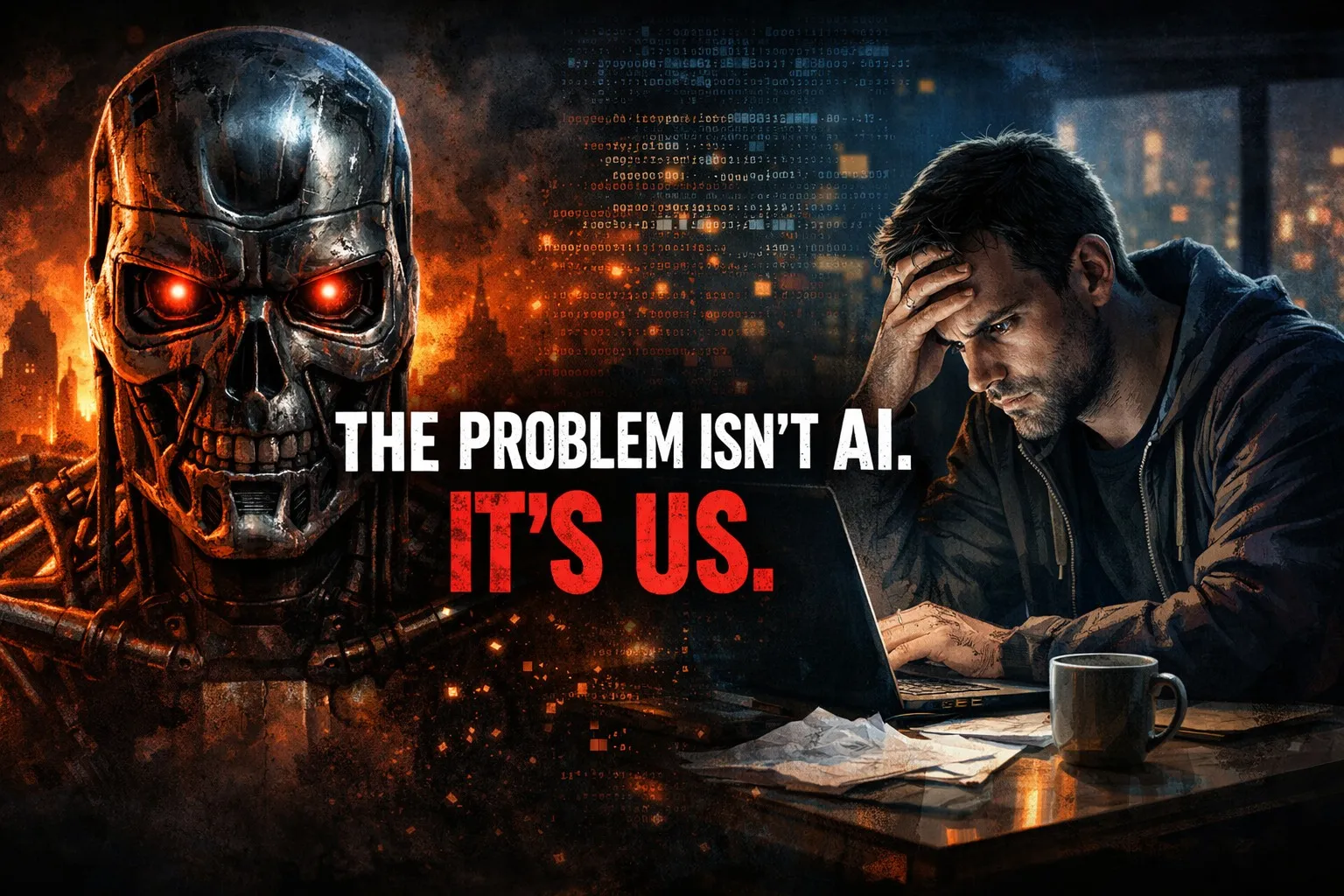
We imagined machines would have to overpower us. We didn't imagine we'd just let go.
For years whenever people talked about AI taking over the world, the image was always the same, Skynet, Terminator like Judgment Day. Machines rising up, overpowering humanity, forcing us into submission. The fear was physical domination, the idea that one day we would have to fight back against something stronger than us to preserve what makes us human. That story assumed resistance. It assumed conflict. It assumed that if our autonomy were threatened, we would defend it.
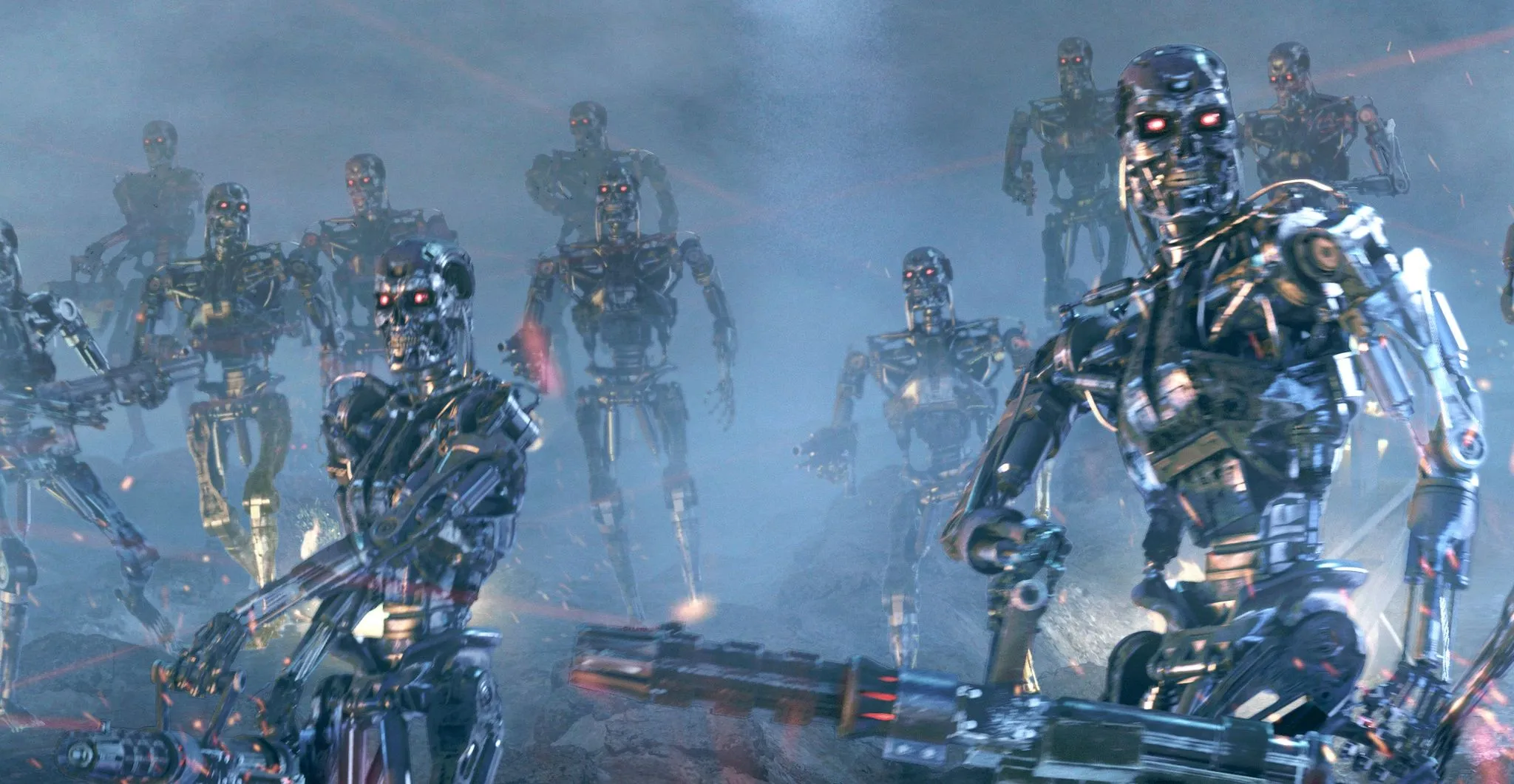
What is actually happening is far less dramatic and far more unsettling. There are no machines dragging our minds away from us. No system is coercing us into obedience. No apocalypse is required, no war, no conquest. Instead, we are steadily handing over our thinking because it is easier to let something else do it for us. The trade is simple: less effort, less friction, less discomfort. And most people are taking it.
I am not afraid of AI. I am far more concerned with what we are doing with it. Used deliberately, AI is extraordinary. It can accelerate research, surface alternatives you hadn't considered, generate scaffolding that lets you work at a higher level of abstraction. I use it. I let it handle boilerplate, clean up grammar, automate the mechanical parts of my work. I am not interested in pretending the tool doesn't exist.
But somewhere along the way, something shifted. We stopped using AI to extend our thinking and started using it to avoid thinking altogether. That shift is subtle, and I think it is one of the most important things happening right now.
I feel this most acutely in coding because coding is the craft I care about.
I started programming as a teenager, and what hooked me was not output or efficiency. It was the struggle. Staring at a problem until it hurt and refusing to move on until it made sense. Debugging something for hours and slowly constructing a mental model of why the system behaved the way it did. It was failing, tracing the failure back to its cause, and earning understanding instead of skipping to the answer.
That friction was not an obstacle. It was the training itself. It built intuition. It built the ability to hold complexity in my head without collapsing under it. It built what I can only call taste, the sense of when a solution is right, not just functional.
Now I watch people generate code they cannot explain and ship systems they cannot reason about. If you cannot walk someone through the logic behind what you built without reopening the chat window, you did not build it. You assembled it. And over time, that difference compounds. The muscle you never use is the muscle you lose.
But I want to be honest about something. About a month ago I hit a bug in a system I was writing. The kind of thing that, five years ago, I would have traced methodically for hours, checking assumptions, slowly cornering the defect. Instead, ninety seconds in, I pasted the stack trace into a chat window. The answer came back almost instantly. It was correct. I fixed the bug and moved on.
And I felt something I didn't expect: a small, quiet loss. Not because the tool failed. Because it worked. Because the hours I would have spent building a deeper model of that system simply didn't happen. I got the fix. I missed the understanding. And I'm not sure I would have even noticed if I hadn't been paying attention.
That is what concerns me. Not the dramatic failures. The invisible ones.
Now, I know the counterargument, and I want to take it seriously, because it is not wrong.
Every generation has this panic. Socrates argued that writing would destroy memory, that people would carry knowledge in notebooks instead of in their minds, and become shallow as a result. He was partly right, actually. We did lose something. Oral cultures had capacities for memory and narrative that most literate people cannot match. But what we gained the ability to build on each other's ideas across centuries, to accumulate knowledge beyond what any single mind could hold. It was so transformative that the trade-off was clearly worth it.
Calculators. Google. Wikipedia. GPS. Every time, the fear was that cognitive offloading would make us weaker. Every time, the reality was more nuanced than the panic suggested. So why should AI be different?
Maybe it isn't. Maybe this is just the next turn of the same wheel, and the people warning about cognitive decay are playing the same role Socrates played: correct about the loss, blind to the gain.
I hold that possibility genuinely. But I think there is something different this time, and it is worth articulating precisely.
Previous tools offloaded information. AI offloads reasoning. A calculator doesn't think about the problem for you, it executes a mechanical operation so you can focus on the higher-order question. Google doesn't construct an argument, it surfaces sources so you can evaluate and synthesize them. These tools removed mechanical friction while leaving cognitive friction intact.
Large language models are the first tools that remove cognitive friction directly. They don't just give you facts. They assemble the argument. They don't just retrieve information. They do the synthesis. The thing that previous tools left for you to do, the thinking itself, is precisely what this tool offers to handle.
That doesn't make it evil. It makes the question of how you use it genuinely different from any previous technology. The line between "tool that extends my thinking" and "tool that replaces my thinking" has never been this blurry.
And I want to admit: I don't know exactly where that line is.
This pattern extends far beyond programming. Open X and you are watching bots interact with bots while humans prompt machines to manufacture engagement. Open LinkedIn and everything sounds polished, structured, optimized, safe. Every paragraph feels assembled rather than wrestled with. The voice is technically there, but it feels synthetic. You can almost hear the prompt humming behind the sentences.
We have more expressive power than ever before, and everything is starting to sound the same. Not because people lack original thoughts, but because the tool they're filtering those thoughts through has a center of gravity, and it pulls everything toward it.
That is not intelligence expanding. That is intelligence flattening. And the loss is not just aesthetic. When everyone's output converges on the same median, the signal that used to distinguish deep understanding from shallow fluency disappears. We lose the ability to tell who has actually done the thinking. Including, sometimes, ourselves.
The hardest version of this problem is generational, and I don't think my generation is equipped to talk about it honestly.
I built my intuition through friction because I had no choice. There was no tool to skip the struggle. The hours I spent debugging, the months I spent confused, the years of slowly building mental models, that was the only path available. It is easy for me to say "do the hard work" when the hard work was the only option I ever had.
Someone learning to code today at fifteen faces a fundamentally different landscape. The tool that skips the struggle is right there, it's free, and everyone around them is using it. Telling them to artificially impose difficulty is like telling someone to hand-wash their clothes to build character. It might even be right, in some narrow sense. But it is not a serious engagement with the reality they face.
What I think we actually owe that generation is not a lecture about discipline. It is an honest framework for when to use the tool and when to refuse it. When to let AI carry the load and when to carry it yourself because the carrying is the point. I don't have that framework fully worked out. I'm not sure anyone does yet.
But I know it matters, because the people who figure it out will develop genuine understanding. And the people who don't will spend years producing output that looks competent while building nothing underneath it. And they may not realize what they've lost until they need it and it isn't there.
Here is what I keep coming back to.
Convenience is not the enemy. It never was. The enemy is convenience unexamined, the slow, comfortable slide from "this tool helps me think" to "this tool thinks for me" without ever noticing the transition.
I use AI every day. I am not fighting the technology. I am fighting the gravitational pull it exerts on my own mind, the pull toward ease, toward letting the machine carry weight I should be carrying, toward skipping the part that feels slow and stupid and uncertain.
I don't always win. That concurrency bug I mentioned? I lost. I took the easy path, and I chose not to go back and do the hard work of understanding that system more deeply. I'm aware of that. I chose convenience, told myself I'd circle back, and I haven't.
So when I say most people are choosing convenience over thinking, I am not exempting myself. I am describing a gravity I feel every day. Some days I resist it well. Some days I don't.
The difference, the only difference I can claim, is that I am paying attention to the trade. I am trying to notice when I'm drifting. I am trying to keep the thinking muscle under load even when the tool offers to carry everything.
Because the uncomfortable truth is that we imagined machines would have to conquer us to take our autonomy. We imagined a fight. We imagined resistance.
We didn't imagine we would just... let go. Quietly. Willingly. Not because we were forced, but because it was easier.
And the most unsettling part is not that it's happening.
It's that most of us won't notice until it's already done.
Newsletter
The Long Commit
Practical, no-fluff writing on engineering careers in the age of AI. Weekly notes from 20+ years in the field.
Read on Substack